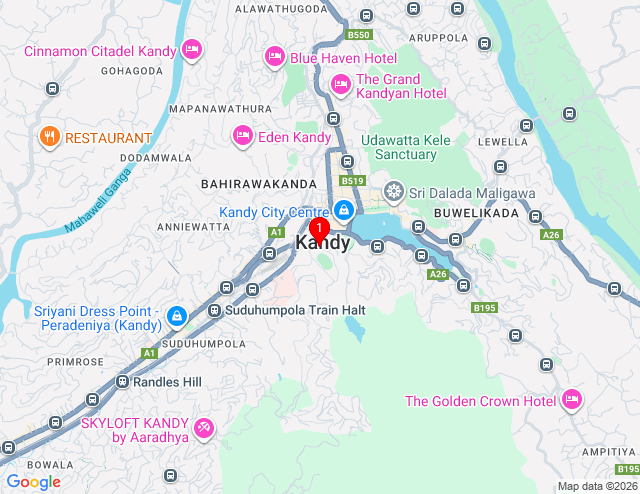
Kandy is Sri Lanka's second largest city located in the mountainous center of the island. It is considered by some as the cultural capital of Sri Lanka, and was declared a world heritage site by UNESCO in 1988. A cooler climate and smaller size make it much more pleasant and accessible than Colombo.
The city has a compact downtown area surrounded by a beautiful tropical rain forest hill country on all sides with exotic animals such as monkeys running around in the wild. The downtown area is really crowded and polluted by day, and filled with some of the world's most aggressive touts by night, but it is also a major shopping destination where all kinds of goods imaginable can be purchased at surprisingly low prices. There are also numerous bakeries, offering delicious local treats all over downtown. Overall Kandy is a great place to experience Sri Lankan culture and cuisine surrounded by a beautiful natural environment.
Kandy has a deep and fascinating history that makes it one of Sri Lanka’s most culturally significant cities. Located in the central highlands, it was the last capital of the ancient Sinhalese kings and remained independent long after other parts of the island fell under European colonial rule. From the late 15th century until 1815, Kandy served as the heart of the Kingdom of Kandy, a powerful and resilient monarchy that successfully resisted Portuguese and Dutch control for centuries.
The city’s importance is closely tied to the Temple of the Tooth Relic (Sri Dalada Maligawa), which houses a sacred tooth relic of the Buddha. Possession of the relic was believed to grant the right to rule, making Kandy both a political and spiritual center of the island. Kings built temples, palaces, and irrigation systems, shaping the city into a stronghold of Sinhalese culture and Buddhism.
In 1815, Kandy fell to the British through the Kandyan Convention, marking the end of Sri Lanka’s monarchy and bringing the entire island under British colonial rule. Despite this, Kandy preserved much of its cultural identity, traditions, and architecture.
Today, visitors can explore Kandy’s rich past through its royal palace complex, ancient temples, museums, and traditional ceremonies. Walking through the city offers a journey into Sri Lanka’s royal heritage, where history, religion, and culture remain deeply woven into everyday life.